

White Fir (Abies concolor 'Fastigiata')
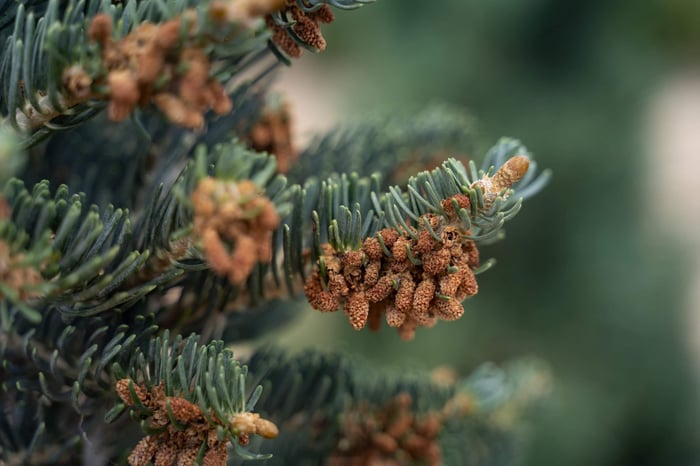
If you’re looking for a refined, columnar conifer that holds its cool in mountain air and urban valleys alike, the White Fir 'Fastigiata' is a top choice. With a narrow, upright habit, soft bluish-green needles, and a tidy profile, it works as a specimen, screen, or structural anchor in mixed beds. In the Intermountain West—Utah, Idaho, Wyoming, and Colorado, its evergreen presence is especially valuable for winter structure and summer shade.
What kind of name is Fastigiata?
It’s not a name, exactly. Fastigiata is a common descriptive word in the world of horticulture. Once you learn it, you’ll see it everywhere. Many trees and shrubs include ‘Fastigiata’ in their name. This means that the plant has a fastigiate growth habit—which means that the branches grow upright in a direction more or less parallel with the main stem or trunk. Fastigiate plants tend to be columnar and more narrow, allowing them to fit in smaller spaces in the landscape.
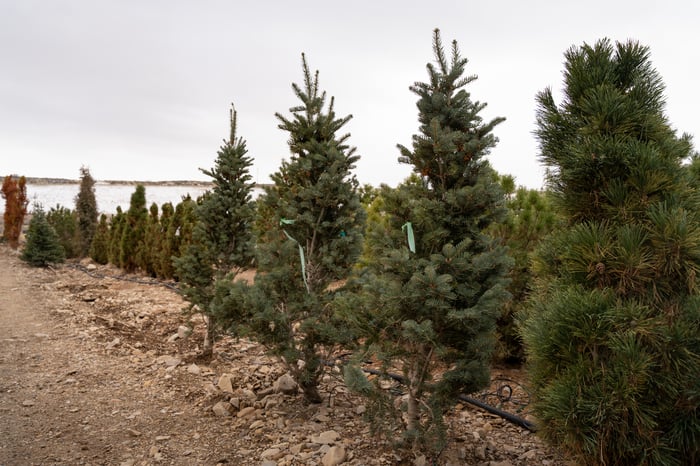
You can find White Fir trees in a variety of shapes and sizes and the information in this article applies to all of them. We chose to focus on ‘Fastigiata’ because its narrower size allows it to fit in more places. In larger properties, you can tuck it away in a small space, plant several as a screen, or make it a focal point of your garden. But it really shines in today’s smaller yards. Where many other conifers may outgrow their space, Fastigiata will fit nicely and blend into the smaller landscape.
What gardeners in our region should know
USDA Zones: White fir is hardy to zone 4, so it should grow in most landscapes in our area. Microclimates and elevation matter. Because our region ranges from 4,000–8,000+ ft above sea level, if you own high-altitude mountain property, you may want to confirm it will be able to handle your winter temperatures.
Sun: It thrives in full sun to partial shade. In lower elevations it won’t hurt to give it a little shade. Perhaps plant it on a north or east side of a structure. But it isn’t absolutely necessary.
Water: Moderate: Once you’ve established it with regular deep watering, you can taper back to less frequent, deep irrigation.
Soils: White Fir prefers well-drained sites; our alkaline soils and heavy clays will need some attention to give firs the best start, but along the benches and in higher elevations, the soil will be just right for them.
Seasonality: Here in Utah, fall is an excellent time to plant conifers. Cooler temps and fall rains are the ideal conditions for root growth and establishment.
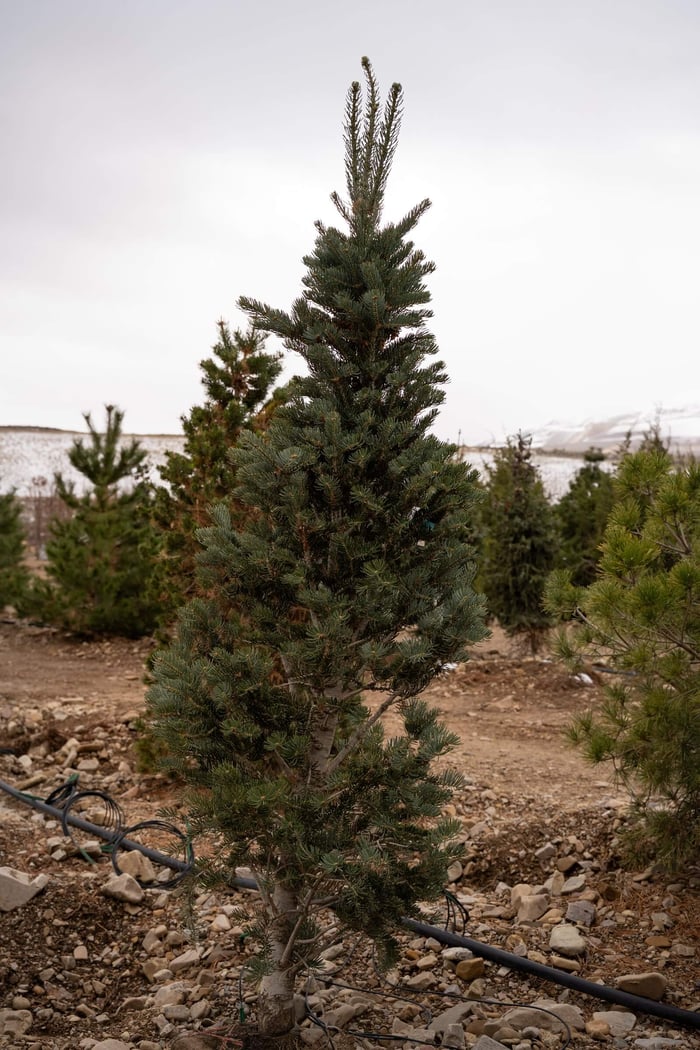
Step-by-step: Planting White Fir in the Intermountain West (Fall edition)
This practical guide is tailored for our hot, dry summers, cold winters, alkaline soils, and windy sites. Follow these steps for a successful planting this fall—Utah’s second, and often best, planting season.
Choose the right site.
Select a location with good air circulation but some protection from prevailing winter winds. If you are planting at lower elevation, hotter sites, consider planting in a location with afternoon shade. At higher elevations your trees can tolerate more sun because the temperatures will be cooler. Allow space for its mature profile. You can expect it to eventually react 5 feet wide, but it’s wise to plan for it to grow slightly larger.Test and prepare the soil.
Check pH and drainage. White fir prefers slightly acidic to neutral soils, but it has proven to perform well in our alkaline soils, especially when it’s well drained. Adding plenty of organic matter such as mulch and compost can help as well. If you have heavy clay, loosen the planting zone and add a generous mix of compost and coarse sand or pumice to improve drainage. Do not over-amend the entire backfill — create a planting pocket with amended soil and blend the edges with the native soil to encourage roots to explore outward. This will allow your tree to become accustomed to your native soil as its roots grow.
However, if the clay content of your native soil is too heavy, amending your planting pocket may lead to serious problems. Heavy clay soil is composed of silt and other fine textured, tightly packed materials that hold water well but is practically non-porous. With nothing to break it up, your soil will hold water at the surface without draining. The surface of your soil becomes extremely hard in the heat and slippery and sticky when wet. Because of this it is not healthy to amend your planting pocket because that nice hole you created for your tree will drain well until it reaches your native clay soil. Then it will fill up like a bowl, leaving your tree roots to sit and soak in a soup of water and soil amendments. Before too long, your tree will die from root rot. It’s often best to plant your tree in unamended soil and water carefully with drip irrigation.
Dig the hole correctly.
Make the hole as deep as the root ball and 2–3 times as wide. Set the root flare at or just above grade; planting too deep invites collar rot. For container-grown trees, remove the container gently and tease circling roots. For balled-and-burlapped stock, cut any circling roots.Plant and mulch.
Place the tree, backfill with your blend, and water deeply to settle soil. Add 4 inches of organic mulch (wood chips or bark) extending to the dripline, but keep mulch 2–3 inches away from the trunk to prevent crown rot and rodent damage.Watering for establishment.
During the first growing season, water deeply once a week (more often in sandy soils or hot spells). After roots are established (12–18 months), you can reduce watering to less frequent sessions. Deep irrigation with a drip system is best in our area because it allows the water to seep slowly through the soil. In fact, drip irrigation complements our clay soil because it drips slowly enough for it to soak deep into the clay, and the clay holds the water near the roots so you don’t need to water as often. Drip or soaker tubing is the best way to conserve water and encourage deep rooting.Protect and monitor.
Stake your trees only if necessary. Struggling against the elements encourages stronger root growth. Watch for needle browning from sunscald or winter desiccation. Consider planting your tree where it receives morning sun and afternoon shade if you are growing in hot valley locations.
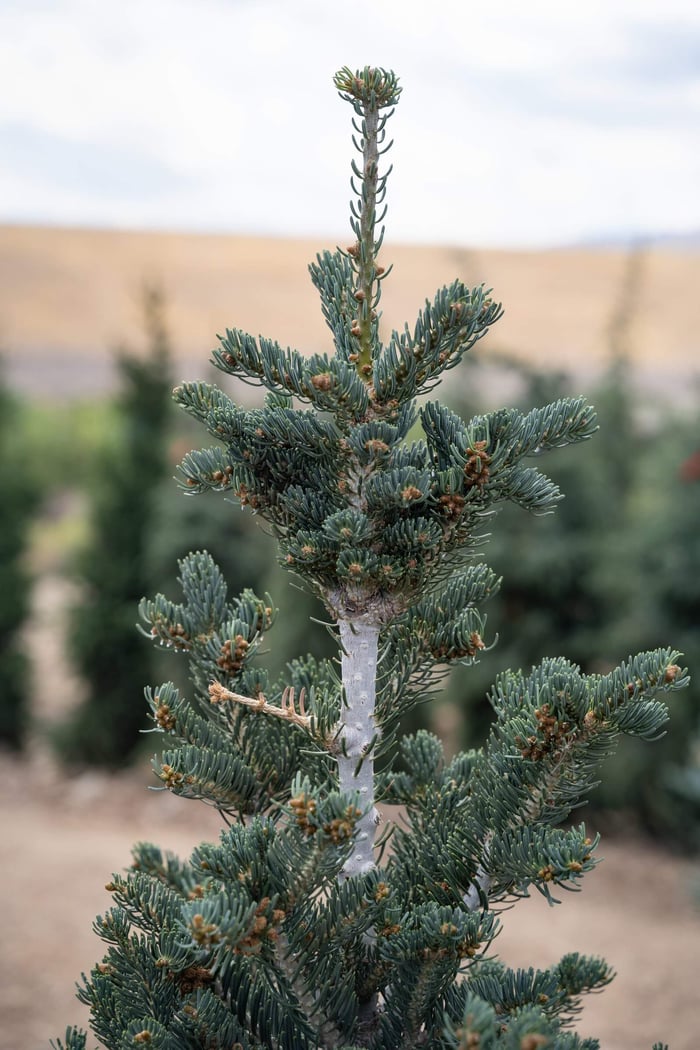
Practical growing tips for our unique Intermountain conditions
Alkaline soils: White fir can struggle in strongly alkaline soils. If you see chlorosis (yellowing needles from iron deficiency), apply iron chelate as a foliar or soil drench and continue improving the organic matter of your soil. Long-term pH change is slow. In fact, in our region, it may be impossible. Water evaporates faster than it is absorbed into the soil, leaving behind salts and other dissolved solids, so you are potentially increasing your soil pH each time you water. This is especially true if you are watering with water from Utah Lake, which is loaded with dissolved solids that can kill many of your favorite plants. Your best option is to focus on good drainage and nutrition and to plant trees, shrubs, and perennials that thrive in our soil and water conditions.
Heat and UV: Provide afternoon shade in hot valley locations. Mulching heavily and watering deeply will reduce root stress and needle scorch.
Wind and winter swings: Plant where winter wind whipping is moderated by buildings or windbreaks. Anti-desiccant sprays can help young trees in exposed spots, but are not a substitute for good siting.
Water conservation: Use drip irrigation, wetting rings, and moisture sensors. White firs are not desert plants. Deep but infrequent waterings are better than frequent shallow ones.
Pests & disease: Watch for aphids, adelgids, and root rot in poorly drained soils. Good cultural care minimizes these risks.
Perfect Plant Partners — Companion Plants Available at Progressive Plants
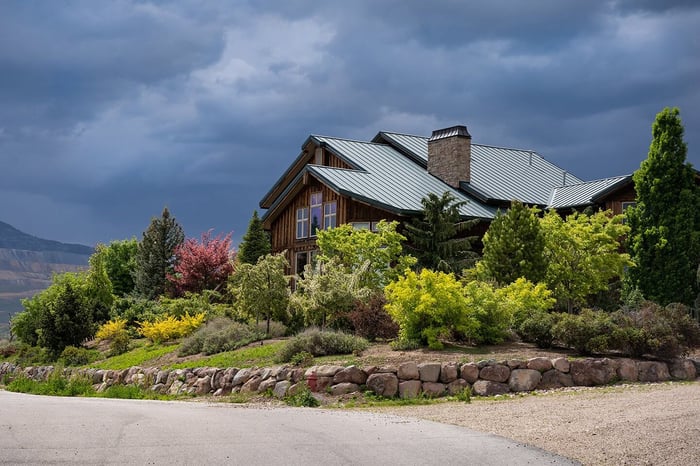
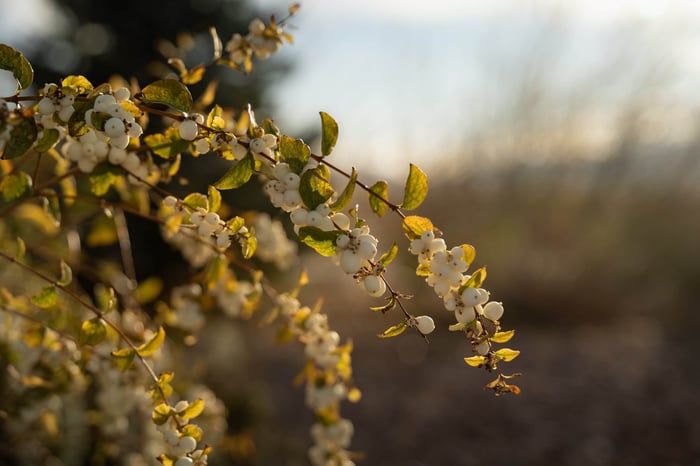
Pair White Fir 'Fastigiata' with other regionally adapted plants for year-round interest. They'll shine against many amazing plants including hydrangeas, snowberries, serviceberries, sumac, roses, and more!
Rocky Mountain Upright Juniper
Juniperus scopulorum 'Skyrocket'
Junipers are even more waterwise than white fir, but their water needs are similar enough that they can be planted together. The narrow habit of 'Skyrocket' complements the columnar White Fir. Both are low-maintenance and tolerant of our dry summers. Because ‘Skyrocket’ is a cultivar of Juniperus scopulorum, the native juniper in our region, it will thrive in our soil and water. You may even consider using it to help as a windbreak for your white fir. Together, they will offer nice vertical accents in your garden, or you could plant them as a waterwise screen.
Bigtooth Maple 'Rocky Mountain Glow'
Acer grandidentatum 'Schmidt' Rocky Mountain Glow®
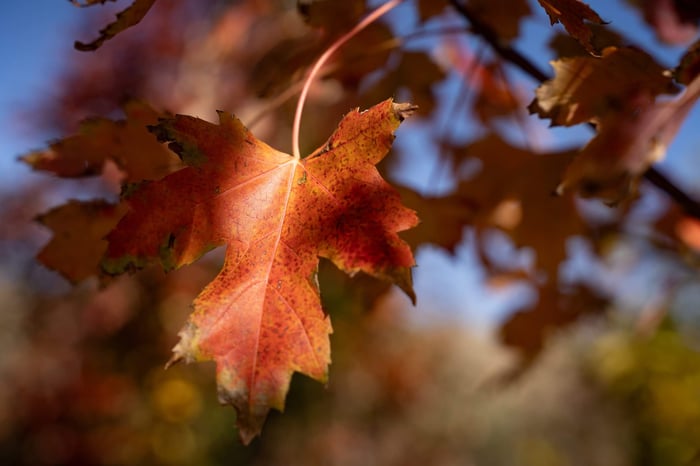
This maple is a great option for your Utah landscape because it’s a native bigtooth selected from the Salt Lake City area and grafted to sugar maple root stock. It's slow growing, and adds seasonal contrast with brilliant yellow-to-orange fall color. It also brings a mid-story element to your garden that softens summer sun for lower-elevation firs. Its water needs are similar to that of White Fir and its regional toughness makes it a reliable partner.
Fall and winter care: the seasonal checklist
Plant in early fall: Plant 4–6 weeks before the ground freezes to let roots begin collecting moisture and establishing themselves in the landscape.
Deep autumn watering: Give trees a good soak after planting and during dry late autumn spells, especially just before the ground freezes. This helps with winter survival, and allows it to get off to a quick start in early spring.
Mulch refresh: Replenish mulch to conserve moisture and protect roots from freeze-thaw cycles, keeping it away from the trunk.
Rodent protection: Protect the trunk from voles and rabbits with trunk guards if you expect heavy snow or rodent pressure.
Avoid late summer fertilizing: Fertilizing encourages growth. If new growth happens too late in the year, it can be vulnerable to winter injury. If fertilizing is needed at all, fertilize in late spring only.
Troubleshooting: common questions
Yellowing needles: Could be iron deficiency in alkaline soil. Treat with chelated iron and improve organic matter; avoid overwatering.
Brown needle tips: Usually from drought, sunscald, or salt exposure. Improve watering practices and adjust siting if necessary.
Sparse growth: Check soil drainage, compaction, and pH. Amend the planting area and consider root aeration for compacted soils.
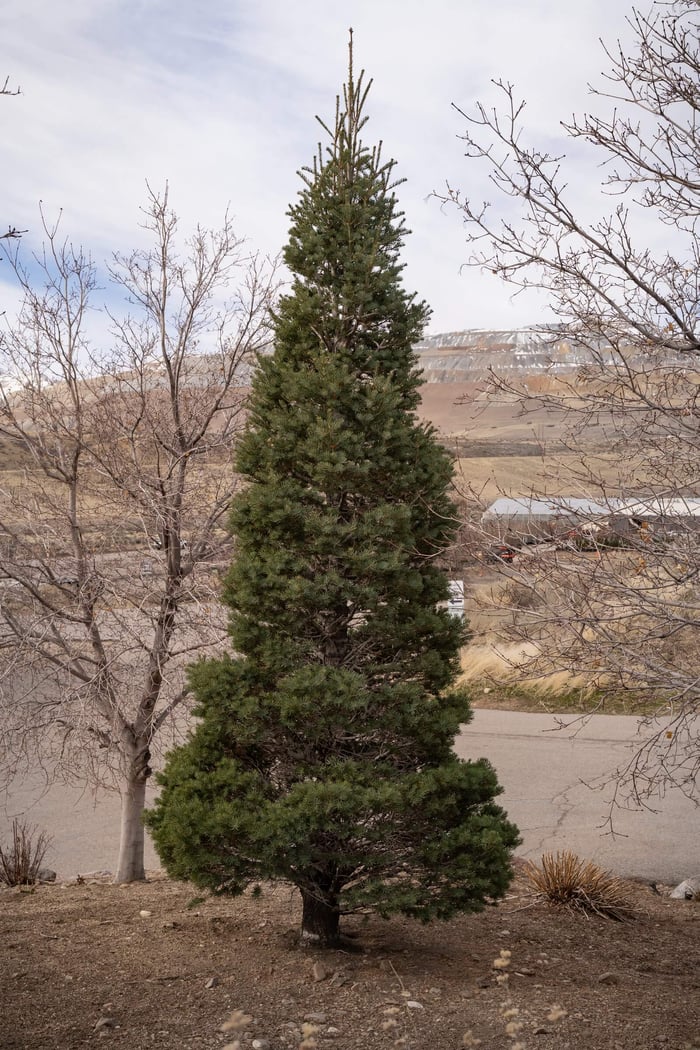
Maintaining your white fir is actually quite simple, especially if you have moderately decent soil and you have planted it in an ideal location on your property. The white firs we have planted near our office are doing exceptionally well. Our office sits at roughly 5,000 feet elevation and they’re planted in full sun without any shade or wind protection. They’re a nice, solid tree that can give you a lifetime of satisfaction in your landscape. This article has a few warnings about soil, water, and wind, but that's because our goal is to teach. We wanted to provide you with enough information so you can be sure your yard is a good candidate for a white fir, and to help you keep it happy in your yard for years to come. Good luck, and happy gardening!